

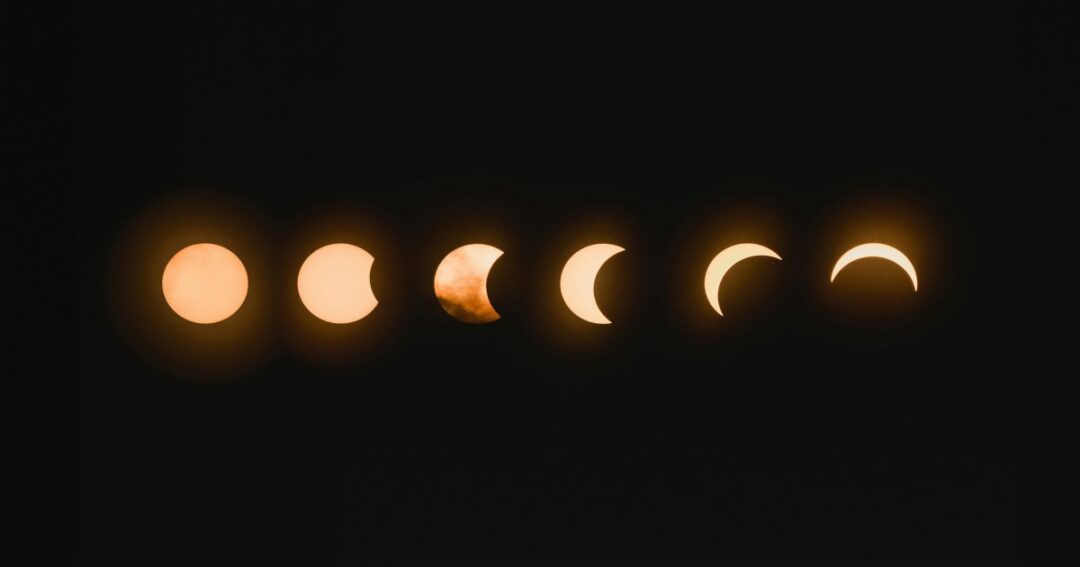

New Delhi, March 2, 2026: A total lunar eclipse will be visible in parts of India on March 3, 2026, offering skywatchers a chance to witness the Moon turn a deep reddish shade in the evening sky. Popularly known as a “Blood Moon,” the phenomenon coincides with the time of Holi this year, drawing both astronomical interest and cultural attention.
A lunar eclipse occurs when the Earth moves directly between the Sun and the Moon, casting its shadow on the lunar surface. During a total lunar eclipse, the Moon passes completely into Earth’s umbral shadow. Instead of disappearing, however, it glows in hues of copper and red — a result of sunlight filtering through Earth’s atmosphere and bending toward the Moon.
Timings in India (IST)
Astronomers have indicated that the eclipse will begin in the afternoon, though visibility in India will depend on local moonrise timings.
- The eclipse is expected to begin around 3:20 PM IST.
- The total phase will occur roughly between 4:34 PM and 5:33 PM IST.
- The event will conclude around 6:46 PM IST.
Since the Moon will rise close to sunset in many Indian cities, viewers in several regions — especially central and western India — may see only the later stages of the eclipse. In eastern and northeastern states, where the Moon rises slightly earlier, the eclipse may already be underway as it appears above the horizon.
Unlike a solar eclipse, a lunar eclipse is completely safe to observe with the naked eye. Clear skies and an unobstructed view of the eastern horizon will offer the best chance of witnessing the spectacle.
Why the Moon Turns Red
The reddish colour during a total lunar eclipse is caused by the Earth’s atmosphere bending sunlight toward the Moon. Shorter blue wavelengths scatter in the atmosphere, while the longer red wavelengths pass through and reach the lunar surface. The effect is similar to the colours seen during sunrise and sunset. Depending on atmospheric conditions, the Moon may appear rust-red, coppery, or even slightly orange.
Cultural and Spiritual Significance
In India, a Chandra Grahan carries religious and cultural significance. The March 2026 eclipse falls around the full moon of the Phalguna month, which is associated with Holika Dahan and Holi celebrations.
According to traditional beliefs, certain rituals are avoided during the eclipse period. Many people observe fasting, prayer, or meditation during this time. The period known as Sutak is considered inauspicious by some, beginning a few hours before the eclipse and ending once it concludes. It is customary for devotees to take a bath after the eclipse and resume regular activities thereafter.
At the same time, astronomers and science enthusiasts view the eclipse purely as a natural celestial event — a reminder of the precise alignment of the Sun, Earth and Moon.
A Rare Sight During Festival Season
While Holi brings colour to streets and homes, the evening sky may add its own dramatic shade this year. A rising reddish Moon, partially shadowed, will offer a quiet counterpoint to the day’s celebrations.
Weather conditions will ultimately determine how clearly the eclipse can be seen. If the skies remain clear, the Lunar Eclipse of 2026 promises to be a memorable blend of science, tradition and spectacle for observers across India.