

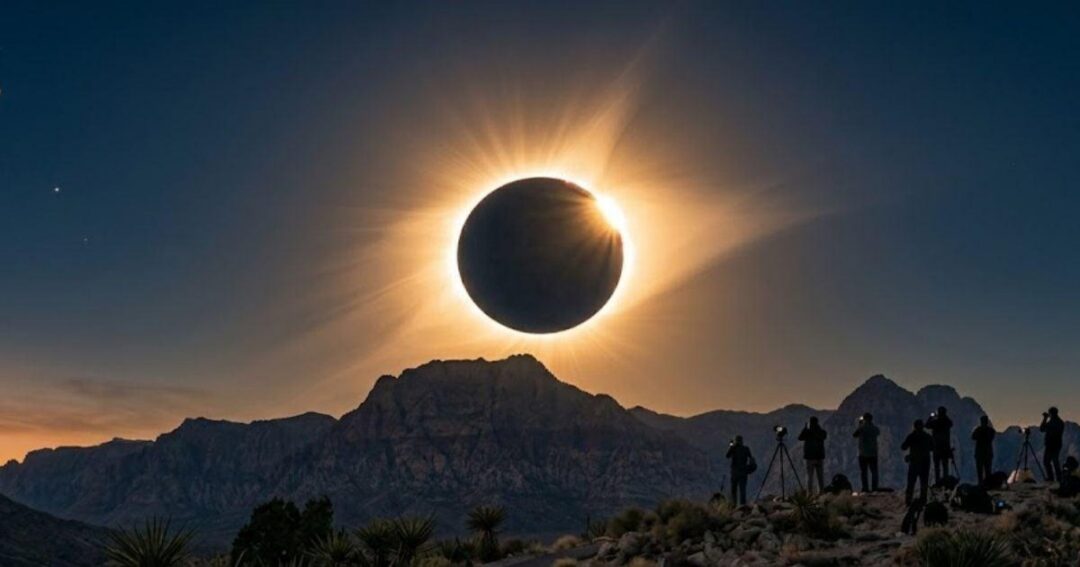

Europe is preparing for one of its most extraordinary astronomical events in decades. On August 12, 2026, the continent will witness its first total solar eclipse in nearly 30 years, attracting thousands of travelers, astronomers, and eclipse enthusiasts from around the world.
With Spain, Iceland, and Greenland positioned along the path of totality, travel bookings are rising rapidly as visitors plan to experience this rare celestial phenomenon.
What Makes the August 12, 2026 Total Solar Eclipse So Special?
The August 12, 2026 total solar eclipse will be the first total eclipse visible from mainland Europe since 1999, making it one of the continent’s most anticipated astronomical events.
During totality:
- The Moon will completely cover the Sun.
- Daylight will briefly turn into twilight.
- Temperatures may drop slightly.
- The Sun’s outer atmosphere, called the corona, will become visible.
Because totality lasts only a few minutes, many travelers consider it a once-in-a-lifetime experience.
Best Places in Europe to Watch the 2026 Total Solar Eclipse
Northern Spain
Northern Spain is expected to become the most popular destination for eclipse tourism.
Visitors can enjoy:
- Long duration of totality
- Favorable viewing conditions
- Historic towns
- Beaches
- Local festivals
- Excellent transport connectivity
Many hotels have already reported increased bookings for August 2026.
Iceland
Iceland offers another spectacular location to witness the eclipse.
Travelers can combine the celestial event with visits to:
- Waterfalls
- Volcanoes
- Glaciers
- Hot springs
- Black sand beaches
The country’s dramatic landscapes make eclipse photography especially memorable.
Greenland
Greenland provides one of the most remote yet breathtaking viewing experiences.
Adventure travelers can witness the eclipse against:
- Massive icebergs
- Arctic landscapes
- Glaciers
- Polar scenery
This destination is ideal for photographers and expedition travelers.
Which Regions Will Experience a Partial Solar Eclipse?
While totality will be limited to specific regions, a partial solar eclipse will be visible across:
- Most of Europe
- North Africa
- Parts of the North Atlantic
- Surrounding regions
Millions of people will still be able to witness part of the celestial event.
Solar Eclipse Travel Is Fueling Europe’s Astro-Tourism Boom
The 2026 eclipse is expected to significantly boost astro-tourism, one of the fastest-growing sectors in experiential travel.
Travel companies have launched:
- Eclipse viewing tours
- Astronomy-guided experiences
- Cruise packages
- Photography workshops
- Multi-country eclipse itineraries
Cruise operators are also offering voyages positioned along the eclipse path to maximize viewing opportunities.
Tourism Destinations Prepare for Record Visitor Numbers
Local governments and tourism authorities are preparing for increased visitor arrivals.
Preparations include:
- Improved transportation services
- Additional accommodation options
- Crowd management plans
- Safety measures
- Public viewing events
Hotels, restaurants, tour guides, and local businesses are expected to benefit from increased tourism spending.
How Rare Is a Total Solar Eclipse in Europe?
Although total solar eclipses occur somewhere on Earth approximately every 18 months, they rarely pass over the same region.
Europe has waited nearly three decades for another total eclipse, making the August 12, 2026 event especially significant for residents and international travelers alike.
Solar Eclipse Safety Tips Every Traveler Should Know
Experts strongly advise visitors to observe the eclipse safely.
Essential Safety Guidelines
- Never look directly at the Sun without certified eclipse glasses.
- Use ISO-certified solar viewing equipment.
- Avoid ordinary sunglasses.
- Remove eclipse glasses only during the brief period of totality if you are inside the path of totality.
- Supervise children while viewing the eclipse.
Ignoring these precautions can result in permanent eye damage.
Why Travelers Are Planning Their Holidays Around the Eclipse?
For many visitors, the eclipse is more than an astronomical event—it is an opportunity to combine science, adventure, and travel into one unforgettable journey.
From Spain’s coastline to Iceland’s volcanic landscapes and Greenland’s Arctic wilderness, the 2026 eclipse offers an exceptional reason to explore some of Europe’s most remarkable destinations.
With accommodation filling quickly and demand continuing to rise, travelers are encouraged to plan early if they wish to experience one of the decade’s most anticipated celestial events.