

Thailand is launching a year-round cultural tourism campaign following the UNESCO World Heritage recognition of Wat Phra Mahathat Woramahawihan in Nakhon Si Thammarat, southern Thailand. The initiative aims to promote the temple’s ancient Buddhist heritage, distinctive architecture and living cultural traditions to domestic and international travellers.
Announced by the Tourism Authority of Thailand (TAT) on July 27, 2026, the campaign follows the World Heritage Committee’s decision on July 25 to inscribe the historic temple on the UNESCO World Heritage List during its 48th session in Busan, South Korea. The recognition makes it Thailand’s ninth World Heritage property, sixth cultural property and first UNESCO World Heritage Site in southern Thailand, according to the announcement.
What Is Thailand’s New UNESCO Heritage Tourism Campaign?
The Tourism Authority of Thailand has introduced “The Twelve Sacred Discoveries Nakhon Si Thammarat: A Journey to World Heritage”, a year-round campaign designed to encourage visitors to experience the region’s Buddhist heritage, cultural traditions and historical landmarks throughout the year.
Rather than promoting Wat Phra Mahathat Woramahawihan solely as a historic monument, the initiative highlights its continuing role as a centre of Buddhist worship, community life and regional identity.
The campaign will feature monthly themes exploring the temple’s architecture, Buddhist teachings, local legends, inherited knowledge and spiritual practices. This approach aims to give travellers different perspectives on the destination while encouraging longer engagement with southern Thailand’s cultural heritage.
Why Is Wat Phra Mahathat Woramahawihan a UNESCO World Heritage Site?
Located in Nakhon Si Thammarat, Thailand, Wat Phra Mahathat Woramahawihan is a historic Buddhist temple with roots dating back to the eighth century. It has served as an important regional religious centre for centuries, reflecting the development of Buddhist traditions and cultural exchange across Asia.
Its architecture incorporates influences associated with northeastern India, central Java, Sri Lanka and the Mon region of southern Myanmar. These historical connections contributed to the development of distinctive religious art and architecture in Thailand and Southeast Asia.
The temple’s significance extends beyond its physical structures. Its continued use by worshippers and local communities demonstrates how historic religious sites can remain active centres of spiritual and cultural life.
The Great Reliquary and Temple Architecture
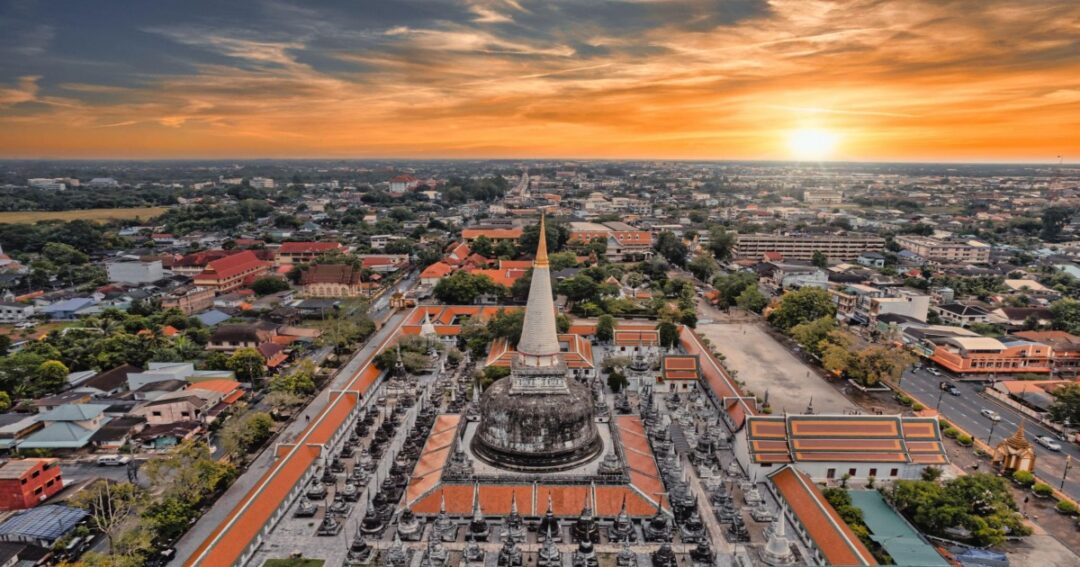
At the heart of Wat Phra Mahathat Woramahawihan stands the Great Reliquary, a prominent bell-shaped Buddhist stupa surrounded by smaller stupas and other religious structures.
The temple complex also features historic worship spaces, Bodhi tree shrines and areas associated with longstanding Buddhist practices. Together, these structures reflect the site’s architectural, religious and cultural importance.
Living Buddhist Traditions and Cultural Heritage
Wat Phra Mahathat Woramahawihan remains closely connected to the everyday spiritual life of the surrounding community.
One of its notable traditions involves devotees wrapping ceremonial cloth around the Great Reliquary. The site is also associated with the Nora dance drama, a traditional performance form rooted in southern Thailand.
These continuing practices demonstrate that the temple is not simply an archaeological attraction but a living heritage site where religious beliefs, cultural traditions and community identity intersect.
How Thailand Plans to Promote Nakhon Si Thammarat Tourism?
The new tourism campaign aims to establish Nakhon Si Thammarat as a leading destination for living heritage, cultural experiences and faith-based travel.
According to TAT Governor Thapanee Kiatphaibool, the UNESCO recognition provides an opportunity to promote the province internationally while placing faith, culture and community at the centre of the visitor experience.
The campaign focuses on several areas:
- Cultural tourism: Showcasing the temple’s architecture, history and local traditions.
- Buddhist heritage tourism: Highlighting religious practices, worship spaces and spiritual experiences.
- Community participation: Encouraging local communities to contribute to tourism development.
- Year-round travel: Using monthly themes to encourage visits across different seasons.
- Sustainable tourism: Supporting local economic opportunities while safeguarding the temple’s heritage.
The initiative seeks to transform international recognition into lasting benefits for local residents, businesses and cultural practitioners.
Nora and Khon Performances Highlight Thailand’s Cultural Heritage
Celebrations following the UNESCO inscription took place in Nakhon Si Thammarat on July 26 and 27, 2026. Government agencies, private-sector partners and local communities participated in programmes celebrating the region’s cultural and spiritual heritage.
Activities included traditional Nora and Khon performances, Buddhist chanting, alms-giving, meditation sessions, ordination ceremonies and cultural exhibitions.
Both Nora and Khon are recognised by UNESCO as Intangible Cultural Heritage of Humanity, highlighting Thailand’s rich traditions of performing arts and cultural expression.
These celebrations also reinforced the connection between heritage tourism, local communities and the preservation of traditional practices.
What Does UNESCO Recognition Mean for Southern Thailand Tourism?
The inscription of Wat Phra Mahathat Woramahawihan creates an opportunity to bring greater international attention to southern Thailand’s cultural and spiritual heritage.
For Nakhon Si Thammarat, the recognition could help attract visitors interested in Buddhist history, religious architecture, traditional performances and immersive cultural experiences.
Thailand’s World Heritage portfolio already includes historic destinations such as Ayutthaya and Sukhothai, archaeological sites such as Ban Chiang, and other cultural and natural properties.
The new inscription strengthens the visibility of southern Thailand within the country’s broader heritage tourism offering.
However, increased visitor interest also brings responsibilities. Sustainable destination management, conservation planning and community participation will be important in ensuring that tourism growth does not compromise the temple’s religious character or cultural significance.
How the Campaign Supports Sustainable Heritage Tourism
The year-round campaign reflects a broader approach to heritage tourism that combines international recognition with conservation and community involvement.
By promoting the temple’s living traditions alongside its architecture, Thailand aims to encourage visitors to understand the destination beyond conventional sightseeing.
Responsible tourism can help support local livelihoods, preserve cultural practices and create economic opportunities for residents while protecting the historic environment.
The long-term success of the initiative will depend on balancing tourism promotion with the conservation needs of Wat Phra Mahathat Woramahawihan and the surrounding cultural landscape.