
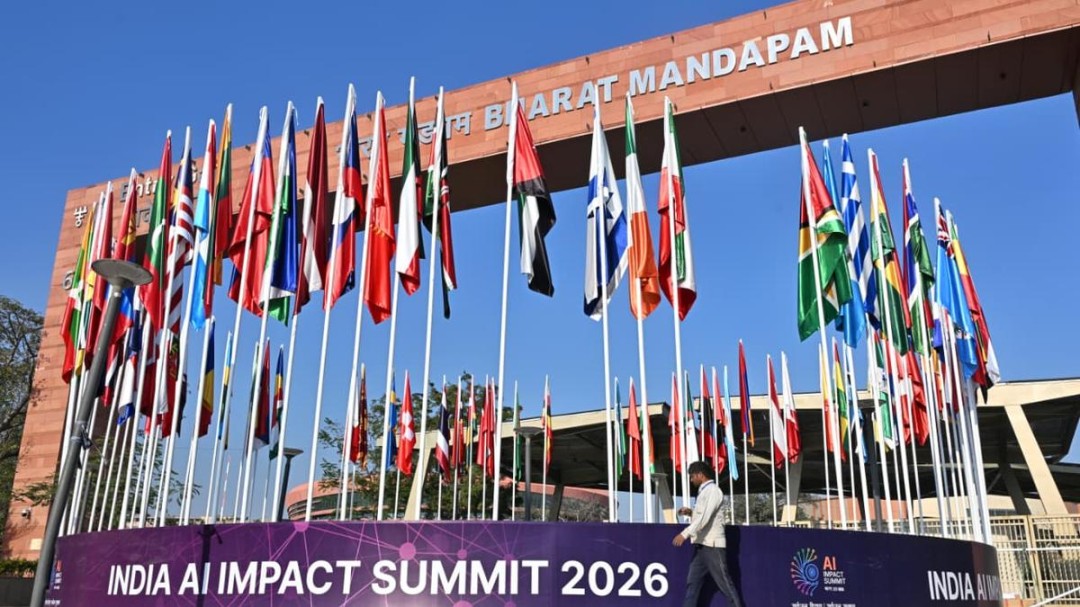

Walk into Bharat Mandapam this week, and you can feel it immediately — this is not just another technology conference. At the India AI Impact Summit 2026, the conversations are bigger, heavier, and far more personal.
Artificial intelligence is no longer a distant promise. It is writing emails, screening resumes, diagnosing illnesses, generating art, and influencing what children see online. And that reality is what has brought policymakers, founders, researchers, and global leaders together in New Delhi — not to marvel at AI’s capabilities, but to ask hard questions about its consequences.
The summit was inaugurated by Prime Minister Narendra Modi, who stressed that AI must remain human-centric and inclusive. His remarks set the tone: progress cannot come at the cost of people.
Much of the discussion revolves around jobs. In closed-door meetings and open panels alike, leaders admit what many workers already sense — roles are changing. Some will disappear. Others will be created. Entire industries are being reshaped in real time. But instead of panic, the emphasis here is on preparation. Upskilling. Reskilling. Making sure the workforce evolves with the technology, not behind it.
Then there is the issue of child safety — a topic that brings a different kind of urgency. As generative AI grows more sophisticated, so do concerns around deepfakes, harmful content, and digital manipulation. Parents, educators, and policymakers are united on one point: safety must be designed into systems from the start. Innovation cannot be an excuse for vulnerability.
And yet, amid these serious conversations, there is optimism. In hallways and demo zones, you see what AI can also do — detect diseases earlier, make public services more efficient, break language barriers, and open access to education. The mood is not fearful. It is cautious, but hopeful.
Explurger Brings AI Into Everyday Travel
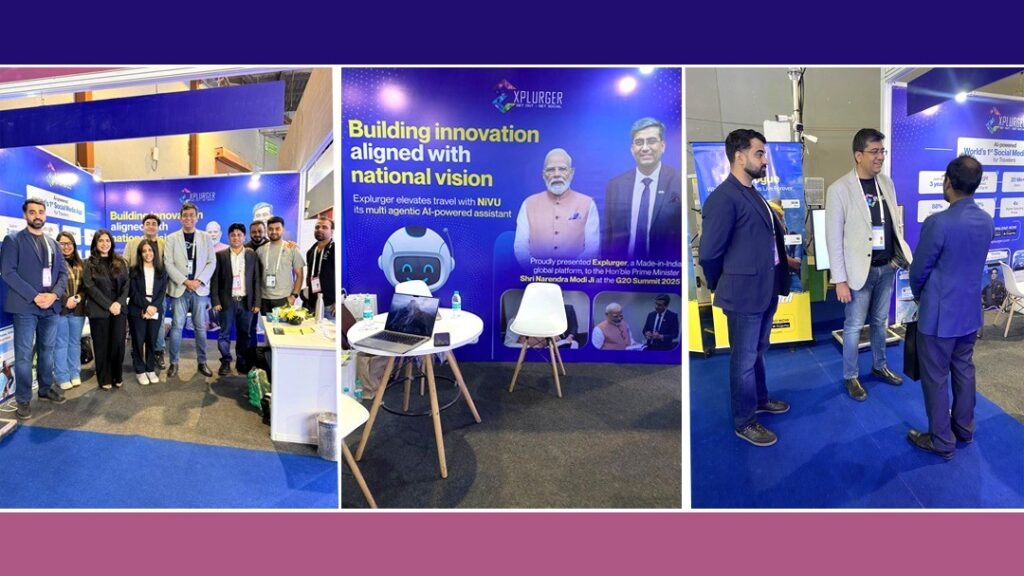
Among the many companies participating in the summit is Explurger, the travel-first social platform that is applying AI to something deeply human — exploration.
While global leaders debate frameworks and regulations, Explurger is demonstrating how artificial intelligence can enhance daily experiences. By using real-time travel intelligence and behaviour-trained AI models built on global movement data, the platform aims to personalise journeys, anticipate traveller needs, and make discovering the world more seamless.
Its presence adds a practical dimension to the summit’s broader themes. AI is not just about policies drafted in conference rooms. It is also about how technology quietly improves the way people move, connect, and experience new places.
As the summit progresses, one thing feels undeniable: this is a turning point. Artificial intelligence is no longer an experiment unfolding somewhere else. It is woven into daily life.
The real debate now is not whether AI will change the world — it already is. The real question, being asked in earnest at Bharat Mandapam, is whether we can shape that change with responsibility, empathy, and foresight.
And perhaps that is what makes this moment feel so significant — the understanding that in building smarter machines, we must also prove we are wise enough to guide them.