

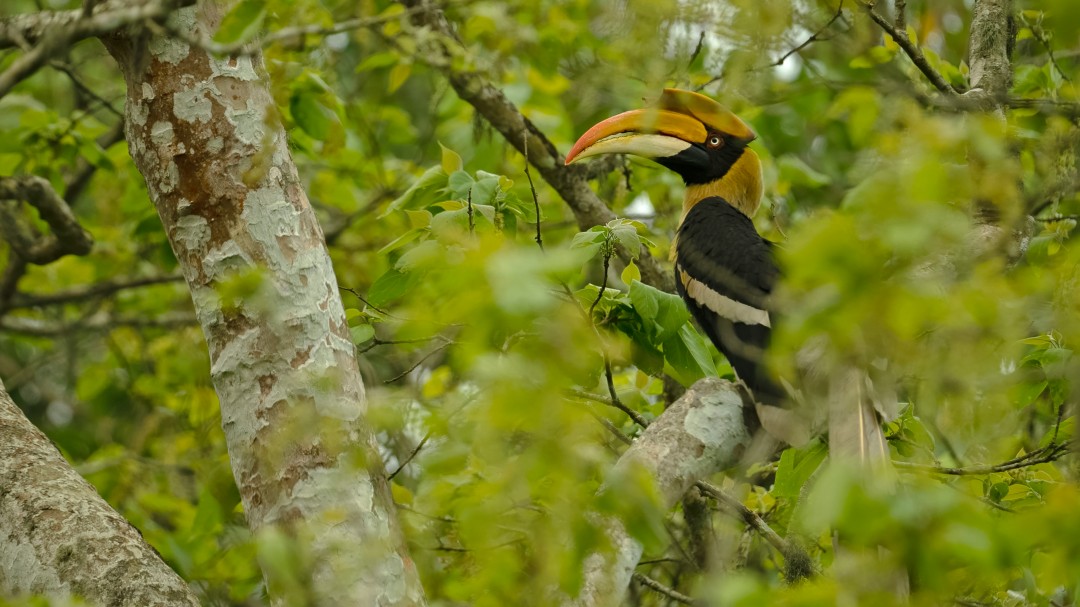

Kaziranga National Park and Tiger Reserve has unveiled the Panbari Birding Circuit, a new trail designed to offer visitors an up-close experience of the park’s rich birdlife. The initiative is aimed at promoting eco-tourism while ensuring the protection of wildlife and natural habitats in one of India’s most famous national parks.
A New Way to Explore Kaziranga
The Panbari range, located in the Burapahar section of the park, presents a contrasting landscape to the park’s iconic floodplain grasslands. Rolling hills, dense semi-evergreen forests, and quiet trails make it an ideal spot for birdwatchers and nature enthusiasts seeking a peaceful, immersive experience. Forest officials believe this area has long been overlooked, and the new circuit will bring it into focus for responsible tourism.
Birdwatching and Wildlife in Focus
The circuit is home to a variety of resident and migratory birds, including hornbills, orioles, and bulbuls. Visitors may also spot the hoolock gibbon and other small mammals that inhabit the forests. Observation points have been strategically placed so that tourists can enjoy wildlife without disturbing it, allowing for both education and recreation.
Community Participation and Conservation
Local communities have been actively involved in the project. Young residents from nearby villages have been trained as guides, helping visitors navigate the trails and learn about the region’s wildlife. This approach ensures that tourism benefits the local population while encouraging conservation awareness.
Visitor numbers are regulated to protect fragile habitats, and the trail is designed to minimize human impact. Officials say the goal is to strike a balance between making the park accessible and preserving its natural beauty.
Strengthening Assam’s Eco-Tourism Profile
While Kaziranga is best known for its one-horned rhinoceros, the Panbari Birding Circuit highlights the park’s diverse avian life and less-explored areas. Officials hope the new circuit will attract both domestic and international travelers who value nature, education, and sustainable tourism.
With this addition, Kaziranga aims to showcase its full ecological richness, demonstrating how wildlife protection, community engagement, and responsible tourism can thrive together.