

A Step Towards Global Recognition
Meghalaya has submitted its living root bridges for inclusion in UNESCO’s World Heritage List, a move that could bring international recognition to one of the state’s most remarkable traditions.
Nature-Grown Engineering Marvels
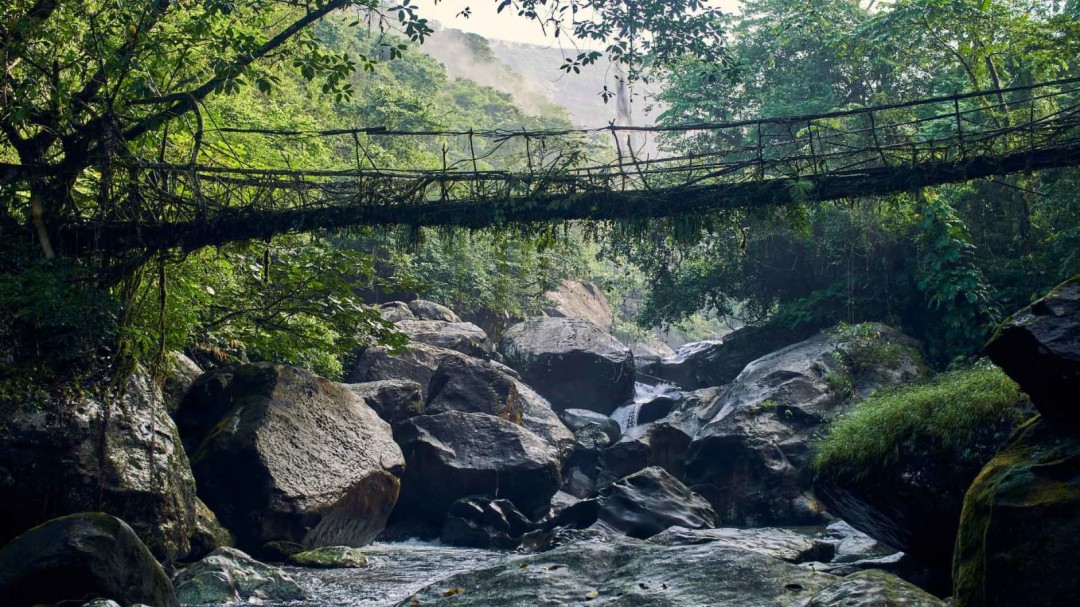
Found mainly in the East Khasi Hills and West Jaintia Hills, the living root bridges are unlike anything built with cement or steel. They have grown over time. Local communities guide the aerial roots of rubber fig trees (Ficus elastica) across rivers and streams, slowly shaping them into strong, natural bridges.
The process is slow and patient. It takes years for the roots to thicken and lock together, eventually forming pathways strong enough for people to walk across. Many of these bridges are believed to be hundreds of years old. Unlike modern bridges that weaken with age, these structures grow stronger as the roots continue to live and grow.
Built by Communities, Sustained by Nature
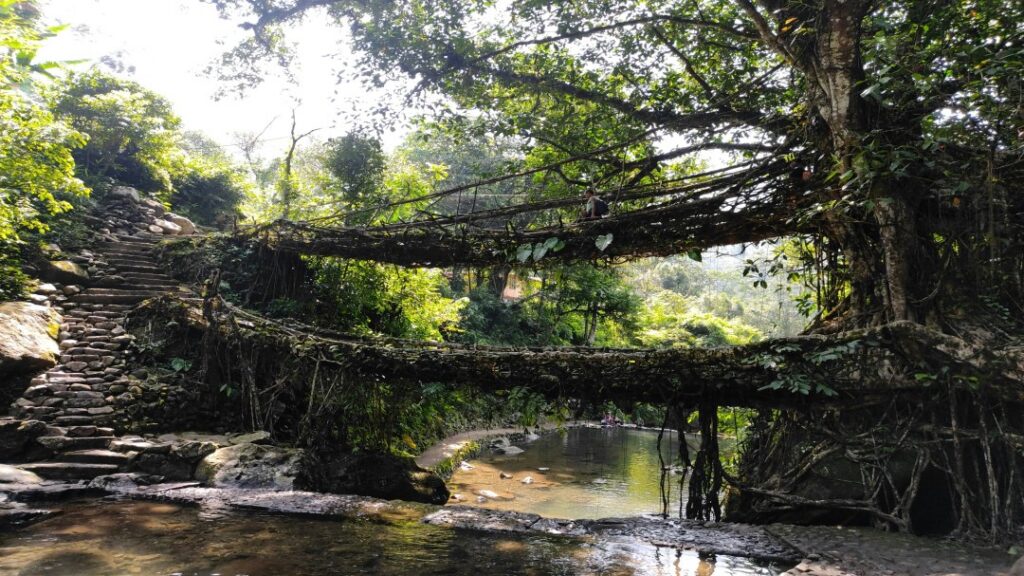
The bridges are built and maintained by the Khasi and Jaintia communities using traditional knowledge passed down through generations. In a region that receives extremely heavy rainfall, the living root bridges have long provided safe crossings during the monsoon season, when conventional bridges are often damaged or washed away.
A Tradition Passed Down Over Time
Creating a living root bridge is a shared effort that can take 15 to 30 years. Often, more than one generation is involved in guiding and caring for a single bridge. This makes each structure not just a means of crossing a river, but a living example of community cooperation and continuity.
What UNESCO Status Could Mean for Meghalaya
If approved, the living root bridges would be added to India’s list of UNESCO World Heritage Sites. This could help bring wider attention to Meghalaya’s cultural heritage and support efforts to protect both the bridges and the forests around them. Experts, however, say that any increase in tourism will need to be managed carefully to avoid putting pressure on local communities and fragile ecosystems.
The living root bridges have long drawn interest from travellers, researchers, and conservationists. With Meghalaya’s nomination now under review, these unique structures may soon receive the global recognition they have quietly earned over centuries.